

Your Gateway to South Africa
Discover the logistics opportunities in Namibia, Botswana, Zimbabwe, Zambia, and South Africa with us.
We navigate complex processes and deliver tailored solutions designed to meet your specific requirements. Join us as we successfully execute your transport projects and help you unlock new markets. We look forward to accompanying you on this journey.
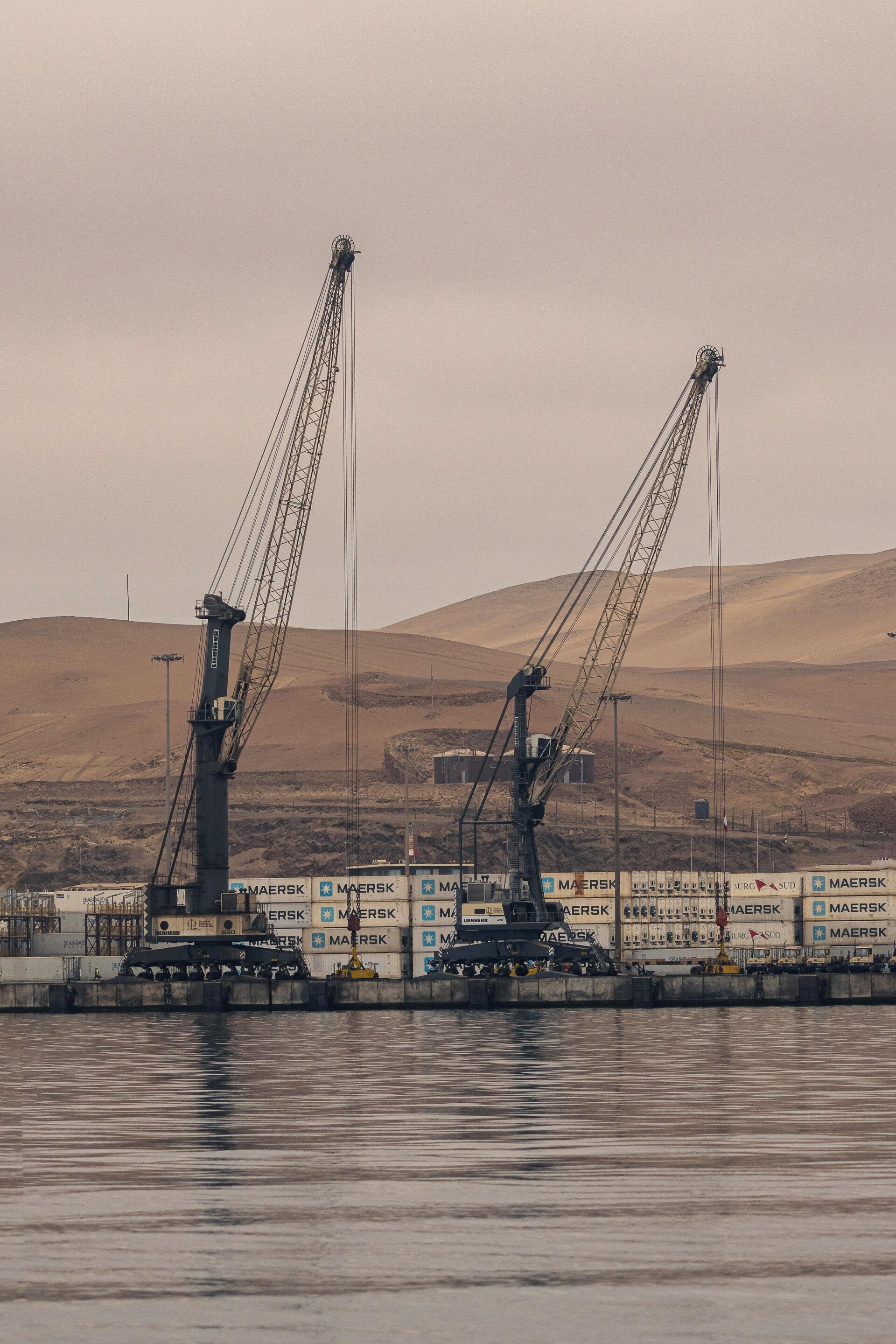
Walvis Bay: Specialized Crane & Project Cargo Handling
The Port of Walvis Bay is a key hub for cargo handling operations. Namport operates, among others, Liebherr LHM 550 cranes with a lifting capacity of 154 mt and LHM 280 cranes with a capacity of 84 mt. The practical single-lift limit is 154 mt, depending on outreach, rigging configuration, wind conditions, and available working window.
In addition, wharf cranes or hired mobile cranes with capacities of 80 mt, 100 mt, and 140 mt may be available (availability not guaranteed). For cargo exceeding 154 mt, tandem lifts, specialized mobile cranes provided by external contractors, or shipboard gear/floating cranes are typically required. Such operations demand project-specific planning and engineering, including a detailed lift plan and method statement.

Customs Procedures in Namibia: Import & Transit
Goods Remaining in Namibia (Import / Home Use)
Imports into Namibia must be declared through a customs declaration. Namibia uses ASYCUDA World and the SAD 500/501 (Single Administrative Document) for this purpose.
For direct importation for home consumption, the procedure commonly referred to in practice is IM 4.
Minimum required documentation includes:
-
Commercial Invoice
-
Packing List
-
Transport Document (Bill of Lading)
-
Special certificates or permits where applicable (e.g. phytosanitary certificates, dangerous goods documentation)
Goods in Transit to Another SACU Country (Transit / Customs Transit)
In Namibia, the applicable procedure is known as Transportation in Bond / Removal in Bond (RIB), governed by official NamRA guidelines.
Transit declarations are also processed via SAD 500/501, using CPC codes such as S800/S801 for RIB movements (e.g. Walvis Bay → Botswana).
A valid Bond/Guarantee is required, and a copy must be attached to the SAD 500/501.
Key Terms
-
Home Use Import (e.g. IM 4)
-
Transportation in Bond / Removal in Bond (RIB)
-
SAD 500/501
-
CPC S800/S801 (Transit / RIB)
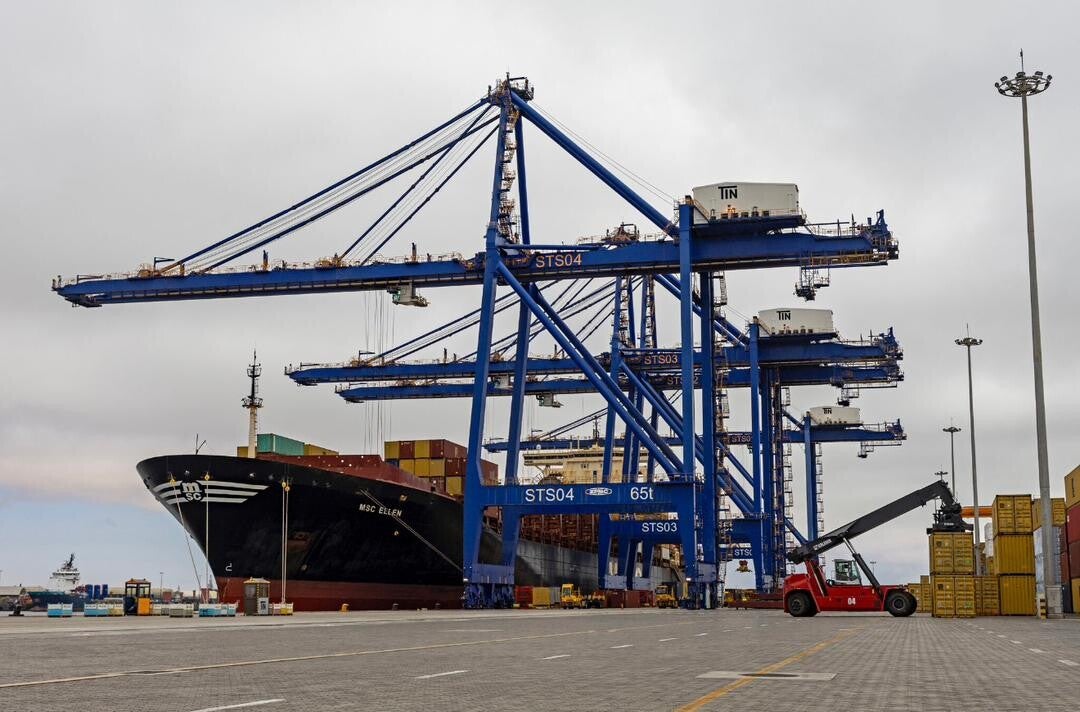
Inland & Cross-Border Container Solutions
Within Namibia (Domestic)
Inland planning requires careful attention to the risk of container detention and demurrage. Unloading and unpacking at the inland destination must be scheduled efficiently to avoid additional costs.
Container handling inland is possible but requires reliable infrastructure and suitable equipment at the destination, such as reach stackers or side lifters. For example, the TransNamib Container Depot in Windhoek operates 45 mt reach stackers, supporting efficient inland container handling.
Cross-Border Operations
For cross-border container transport, the applicable transit/bond procedures (see RIB / Transportation in Bond) must be observed. In addition, country-specific road permits may be required, particularly for abnormal, overweight, or oversized container movements.
Border procedures, operating hours, and route compliance become critical time factors in cross-border operations.

Range of Commodities
Transported Goods
In addition to charcoal, we transport a wide range of cargo, including:
-
Machinery and industrial plants
-
Construction and earthmoving equipment
-
Mining and mineral processing equipment
-
Agricultural machinery and equipment
-
Vehicles and special-purpose vehicles
-
Heavy lift and project cargo
-
Charcoal and other traded commodities
-
Containerized industrial and commercial goods
Note on the Images used
The images used in this document are provided for illustrative purposes only. Unless otherwise indicated, all image rights remain with their respective owners. Any reproduction, distribution, or further use requires prior authorization from the rights holder

Road permits for heavy cargo
In Namibia, permits for heavy and oversized transports are applied for through the Roads Authority using the “Abnormal Load Permit / Vehicle Permit Application.”
An Abnormal Permit is required if the load exceeds the following thresholds:
-
Length > 18.5 m
-
Width > 2.6 m
-
Height > 4.3 m
It is important to note that these permits are route-specific, meaning they take into account the exact route to be used, including road conditions, bridge capacities, and clearance heights.
The processing time for standard abnormal permits typically takes several working days. In cases involving complex oversize dimensions, a longer planning phase is required. Realistically, one should allow up to 7 working days for processing, while larger and more complex cases often require additional time.
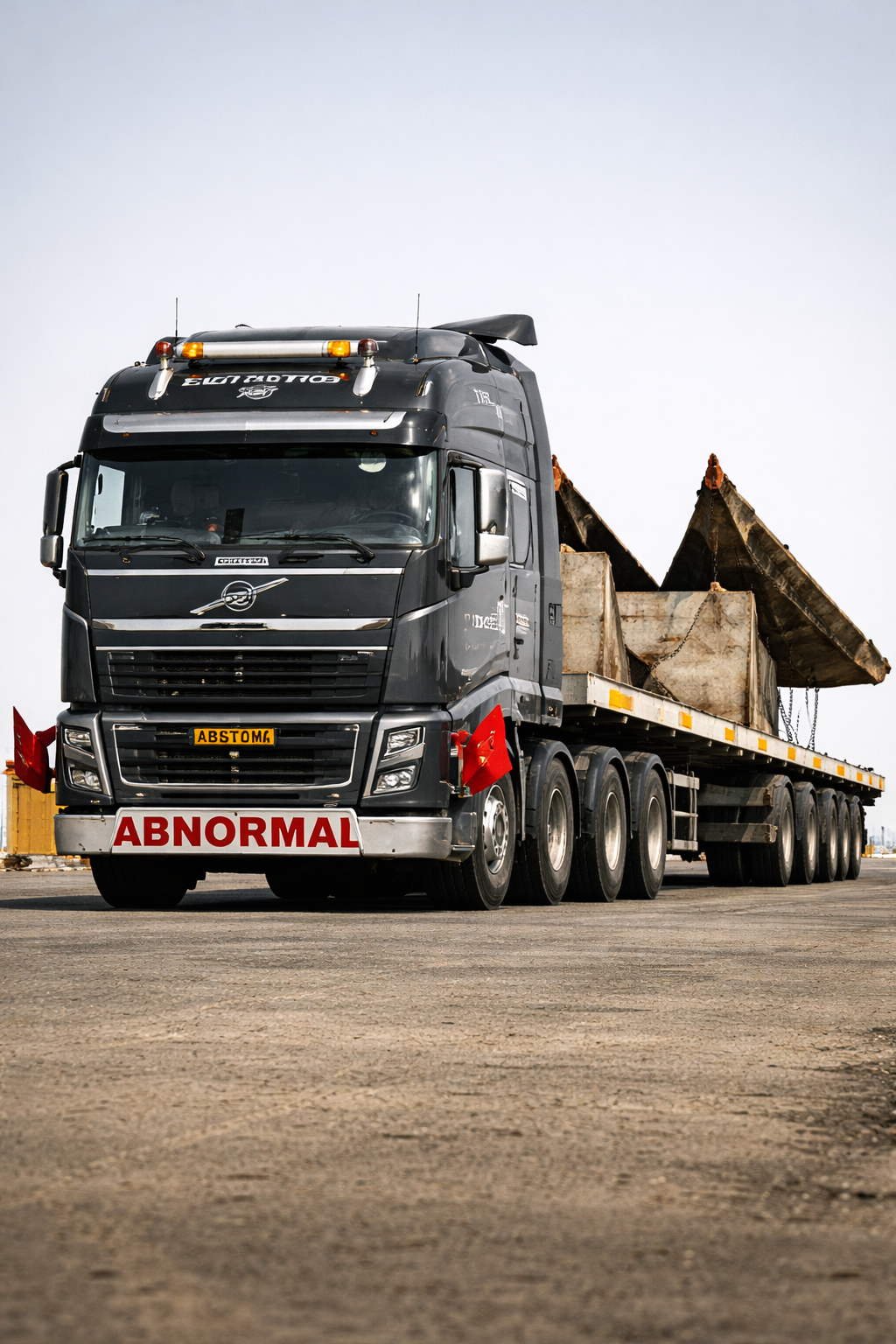
Police Escorts for Abnormal Load Transports in Namibia
General Principle
In Namibia, police escorts are not determined based on fixed nationwide dimension tables. Instead, they are assessed on a case-by-case basis as part of the Abnormal Load permit approval process. The requirement for a police escort results from conditions imposed by the Roads Authority and the Namibian Police, depending on dimensions, weight, route, and traffic-related risks.
When Are Police Escorts Required?
Police escorts may be mandatory when:
-
The approved load or vehicle combination significantly affects normal traffic flow
-
Opposing lanes, bridges, or roundabouts are impacted
-
The safety of other road users cannot be ensured without official supervision
-
A police escort is stipulated as a condition in the Abnormal Load Permit
The decision is always project- and route-specific.
Official Responsibilities
-
Roads Authority Namibia: Approval of abnormal loads and determination of transport conditions
-
Namibian Police (NAMPOL): Execution of police escorts and coordination of time windows and operational planning
Approval Procedure
Applications are submitted using the official form titled “Abnormal Load / Vehicle Permit Application.”
The necessity of a police escort is assessed during the permit review process and, if required, specified as a binding condition in the issued permit. No deviation from these conditions is permitted without explicit authorization.
Lead Time
Police escorts require prior coordination with the competent authorities. The required lead time depends on the size and weight of the load, route characteristics, and police availability. Short-notice requests are generally not feasible. For complex transports, a lead time of several days should be anticipated.
Important Notice
There is no publicly published nationwide dimension threshold that automatically triggers a police escort requirement. The decisive factor is exclusively the approved Abnormal Load Permit and the specific conditions set out therein.
Contact us for your logistics solution
That text is already clear and professional. If you’d like it slightly more powerful and commercially polished, here is a refined version:
Benefit from our expertise in maritime logistics and our deep regional know-how. We are your trusted partner for transports to and through Namibia, as well as the neighboring SACU countries. Let us work together to design the most efficient and reliable route for your cargo.
If you want it more technical, more executive, or more sales-driven, tell me the tone you’re aiming for